

Process
Find what the averages hide.
Coming soon
Find the slow steps. Inspect the handovers. Challenge a workload comparison or an approval that breaks the rule. Follow each finding to the records and definitions behind it.
01 / Where you can improve
Nine questions you can investigate.
Nine ways to understand performance and focus your next improvement. Each connects a business question to the Reader view that answers it.
Each question, its view and the data it needsProcess
Which handovers slow things down?
See People · HandoversProcess
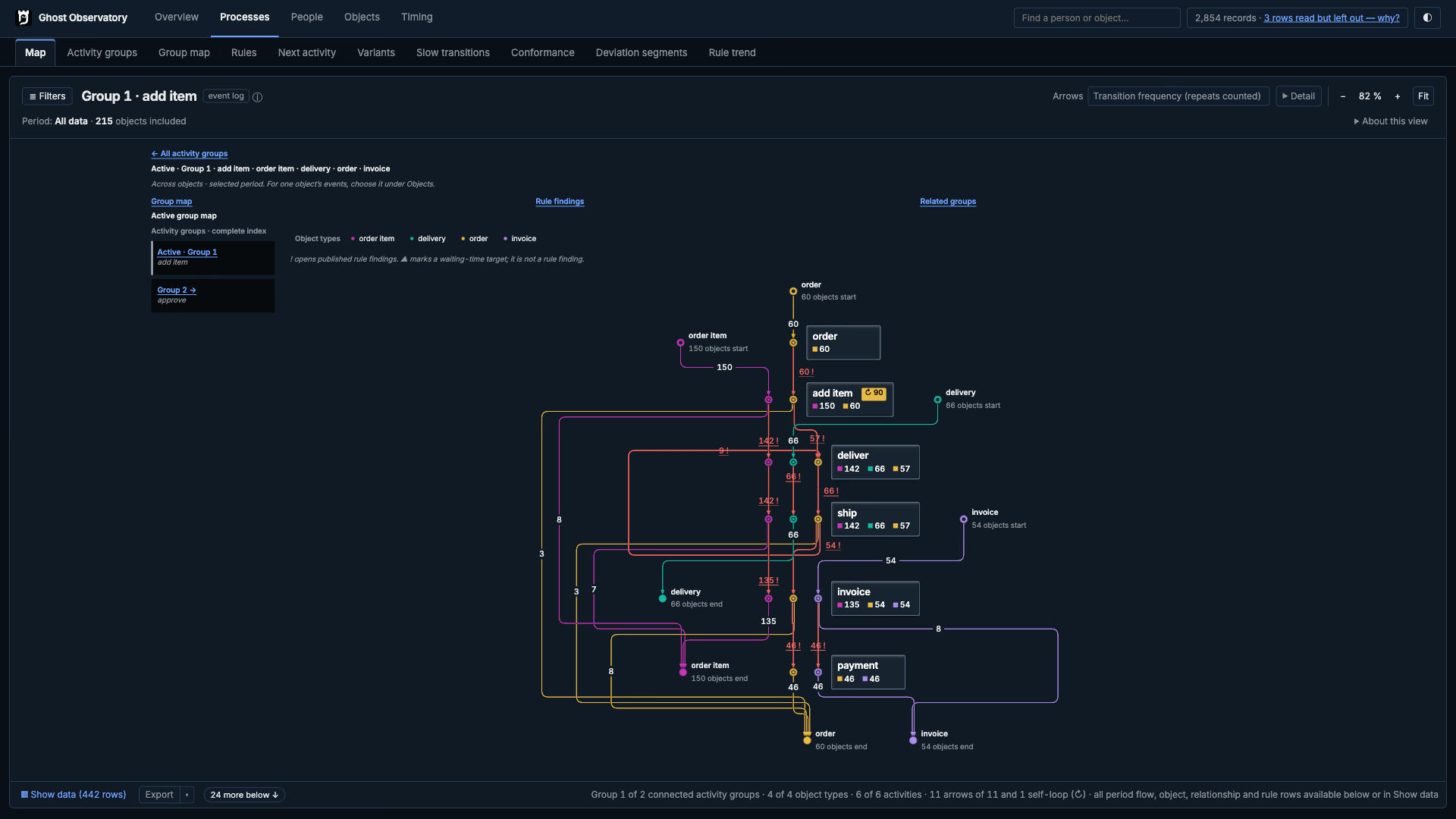
Which routes does the process take?
Preview Processes · Object-centric mapDelivery
Which work needs attention first?
See Objects · At riskTime
What work time was recorded?
Preview People · DayPeople
How is the workload shared?
See People · Workload viewsControls
Where do controls need attention?
Preview Processes · RulesCapacity
How does work fit the schedule?
See People · Work time vs plannedEvidence
Can I trace a result back to its records?
See data quality and evidence02 / Reliable measures
Know what each measure includes.
A number without a definition is an invitation to get it wrong. Ghost Observatory keeps recorded effort, elapsed time and missing data distinct.
- 01
Keep gaps in activity visible.
Gaps in telemetry are shown as unavailable. An absent record never becomes a claim that someone was idle.
- 02
Distinguish time from effort.
Processing intervals and a person’s recorded work time measure different things. Four hours in a queue represents delay; effort needs its own evidence.
- 03
Respect what each source measures.
System-recorded and self-reported work remain separately inspectable. Their admitted work intervals also form a total clock coverage, with overlapping time counted once. Screen observations remain separate.
- 04
Keep every selection grounded.
The Reader uses the figures published by the Engine. It declines filters with no published results, keeping each selection tied to a measured scope.
See how the safeguards work.
See how the product handles missing activity, waiting time and recorded work so you can interpret each measure correctly.
How the safeguards workSee a rejected row.
The sample records three rejected rows, each with its source file, row number and reason.
Inspect the rejected rows03 / Details
Calendars, privacy and configuration.
One SQLite file holds every result; optional pseudonymisation replaces mapped personal identifiers with stable pseudonyms when you enable ANONYMIZE: true and provide a 32-byte key; your calendars and a pinned time-zone database set the clock; and the AI, if any, is the one you connect.
04 / Next
Start with the published sample.
Explore 300 synthetic claims in the published sample. Follow a finding from the Reader to its source row, then see which exports can answer the same questions in your operation.
Follow a finding Explore data sources Process mining explained Tour the ReaderChoose a measure by what it answers.
Elapsed time, recorded work and event-count concentration describe different aspects of an operation. Their definitions explain which comparisons the records support.