

Explained / 01
Your systems have already recorded the work.
Orders, approvals, claims and handovers leave records across operational systems. Those records rarely show the entire process in one place. Process intelligence connects declared events and work objects so you can examine how work actually moves. Missing records remain gaps in that picture.
Explained / 02
How does process mining work?
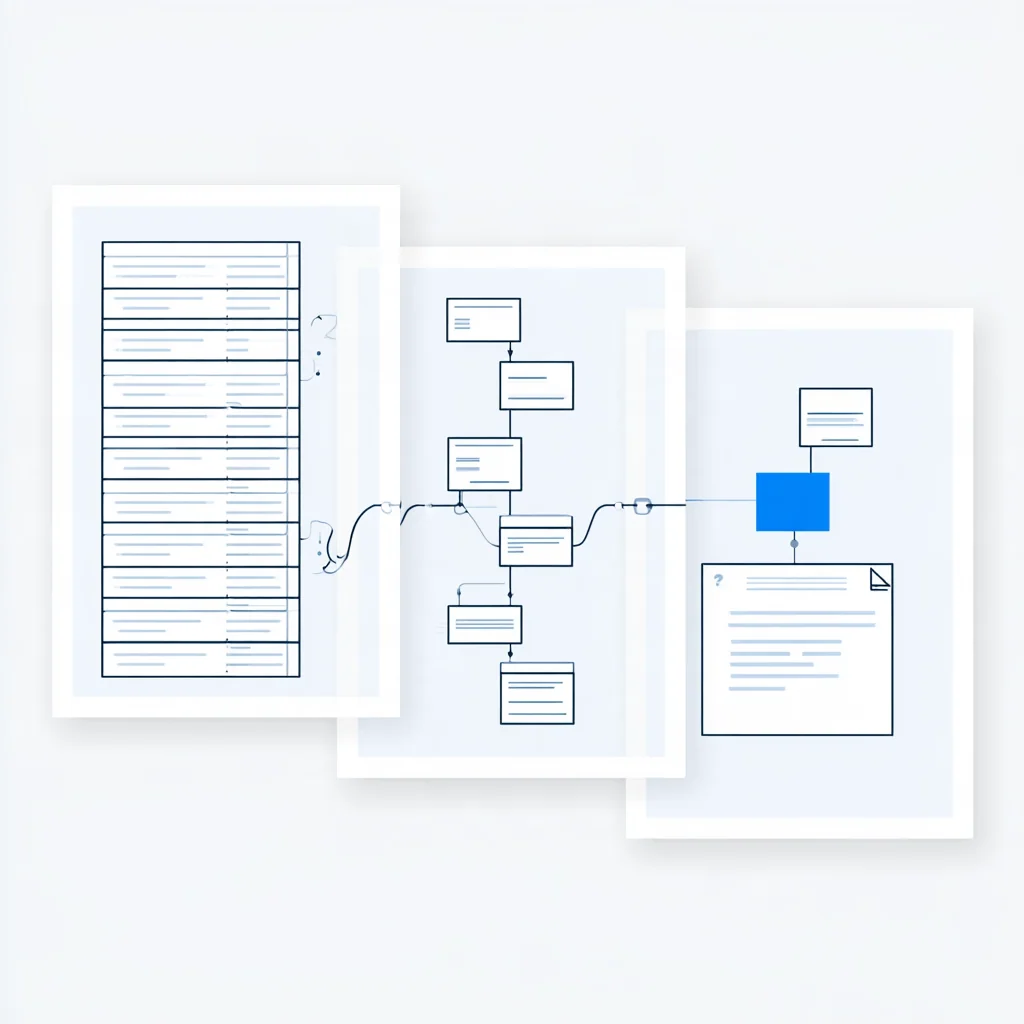
Start with records that identify a work object and an activity. Declare the event order; use timestamps for timing analysis. Declare what the fields mean and which system is authoritative. The Engine then reconstructs the order supported by those records. It must not invent a missing event or an ordering that the data cannot establish.
Read the process mining guide for the complete explanation.
Explained / 03
What can the result reveal?
Routes through a process, repeated work, waiting between known steps, workload distribution, bottlenecks and rule breaches. Demand the measure, time period, work object and supporting records behind a finding. You need those details to challenge the result and check whether a change helped.
Explained / 04
What can't the numbers tell you?
They cannot establish a person's motives, the quality of work never recorded or why a delay happened without the relevant context. Missing events are not zero activity. Different responsibilities, task difficulty and working conditions matter when interpreting performance.
Explained / 05
Can this make assessments fairer?
Make the evidence and the rules visible. Consistent, traceable measurement can expose unequal treatment and challenge unsupported judgments. Compare responsibilities, recording coverage and working conditions before comparing people. Anyone affected should be able to question the records and contest the conclusion.
Explained / 06
How do you check a finding?
Follow it to the source rows and reproduce the calculation independently. Ghost Observatory publishes one SQLite result file containing the results and the evidence required for the available checks. The claims example includes synthetic inputs, the result file and verification queries you can try today.
Explained / 07
What should a team do with the insight?
Identify the delay or variation, confirm its cause with the people doing the work, measure its consequences and choose a change you can verify. That might mean improving a handover, changing a rule, balancing work, automating a repetitive task or rebuilding capability in-house.
Inspect Ghost Observatory and its current development status.